Chocolate Bourbon Cake w/Meringue
Ingredients
Chocolate Cake:
175g salted butter, softened
160g fine cane sugar
3 large eggs, room temperature
100g plain yogurt
20g espresso, about 1 shot
2 tbsp bourbon, of choice
1 tbsp vanilla bean paste, vanilla extract may also be used
175g all-purpose flour
20g cocoa powder
20g hot cocoa powder
1 1/2 tsp baking powder
Brown Sugar Milk Soak:
1 cup whole milk
1/2 cup dark brown sugar
Vanilla Meringue:
6 egg whites, use fresh egg whites, not pasteurized carton whites
250g fine cane sugar
1 tbsp vanilla bean paste, vanilla extract may also be used
Method
Grease an 8-inch cake pan thoroughly with melted butter, coating the entire inside of the pan evenly. Let the butter solidify, then go back and check that everything is well greased.
In the bowl of a stand mixer, add the sugar and softened butter. Using the paddle attachment, beat until pale and fluffy, about 2–4 minutes. Do not rush this step — proper creaming is essential for the cake’s texture.
Once fully creamed, add the eggs one at a time, mixing until each is fully incorporated before adding the next. If the butter was properly creamed, the mixture should not look broken or curdled. After all the eggs have been incorporated, mix in the yogurt, espresso, bourbon, and vanilla. Beat until smooth.
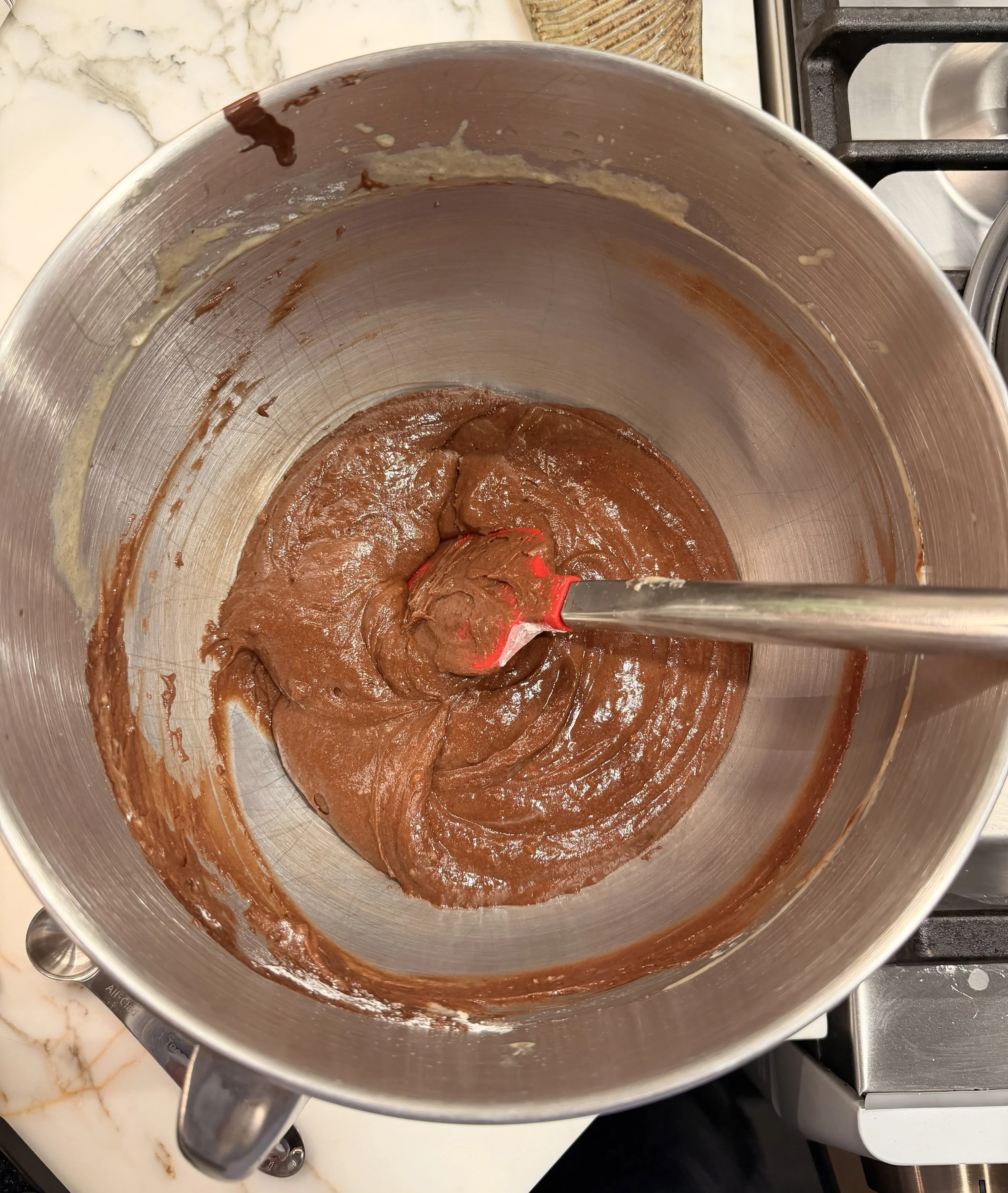
In a separate bowl, sift together the flour, cocoa powder, hot chocolate powder, and baking powder. Add half of the dry ingredients to the wet mixture and mix until no pockets of flour remain. Add the remaining dry ingredients and mix until just combined. The batter will be thick but pourable.
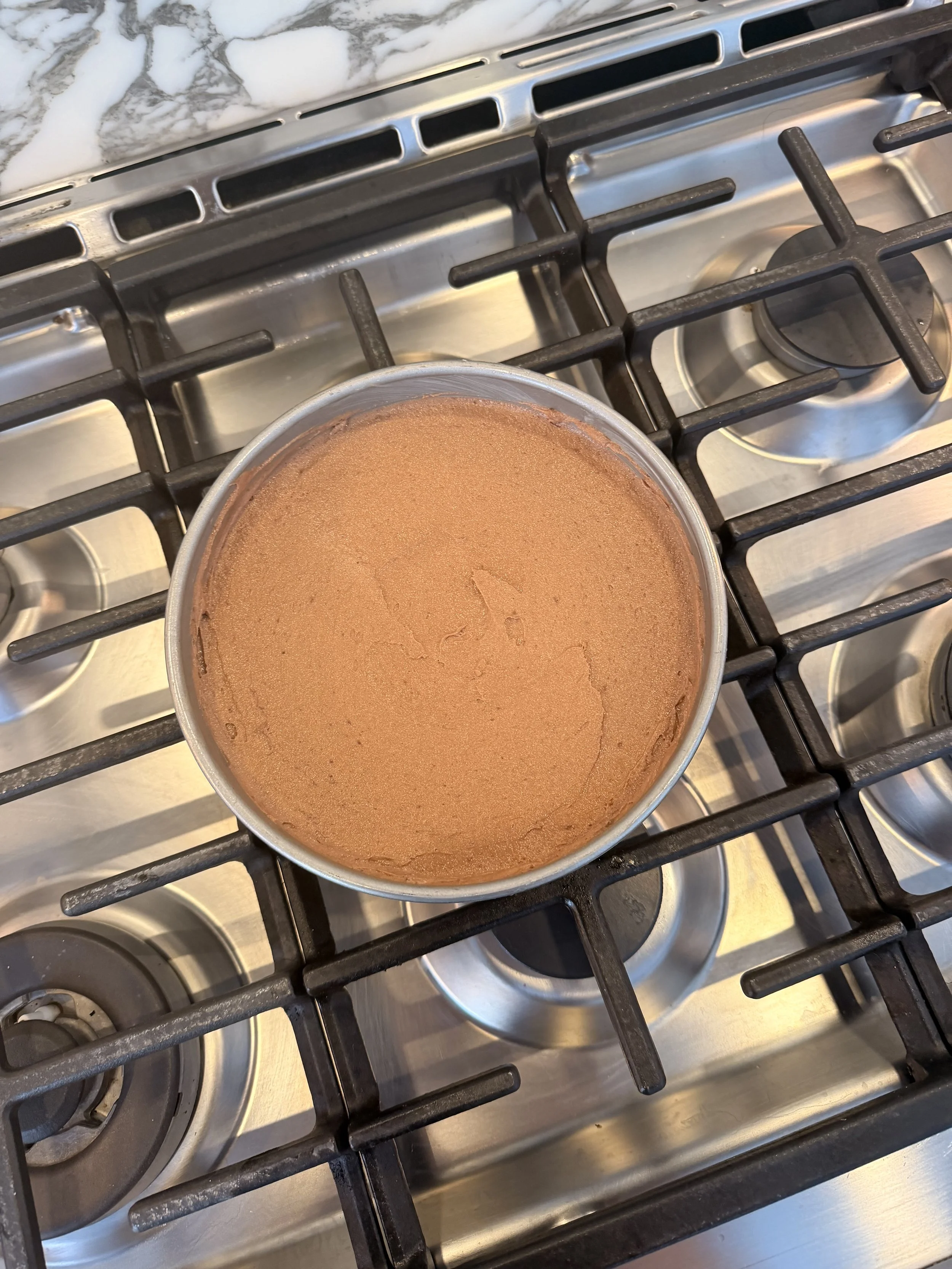
Pour the batter into the buttered cake pan and use an offset spatula to smooth the top. Bake in the preheated oven for 30–40 minutes, until the top is firm to the touch and a toothpick inserted into the center comes out clean.
While the cake is baking, prepare the milk soak. In a small saucepan, combine the milk and brown sugar. Place over medium heat and stir until the sugar has completely dissolved. Pour into a bowl and refrigerate until cool.
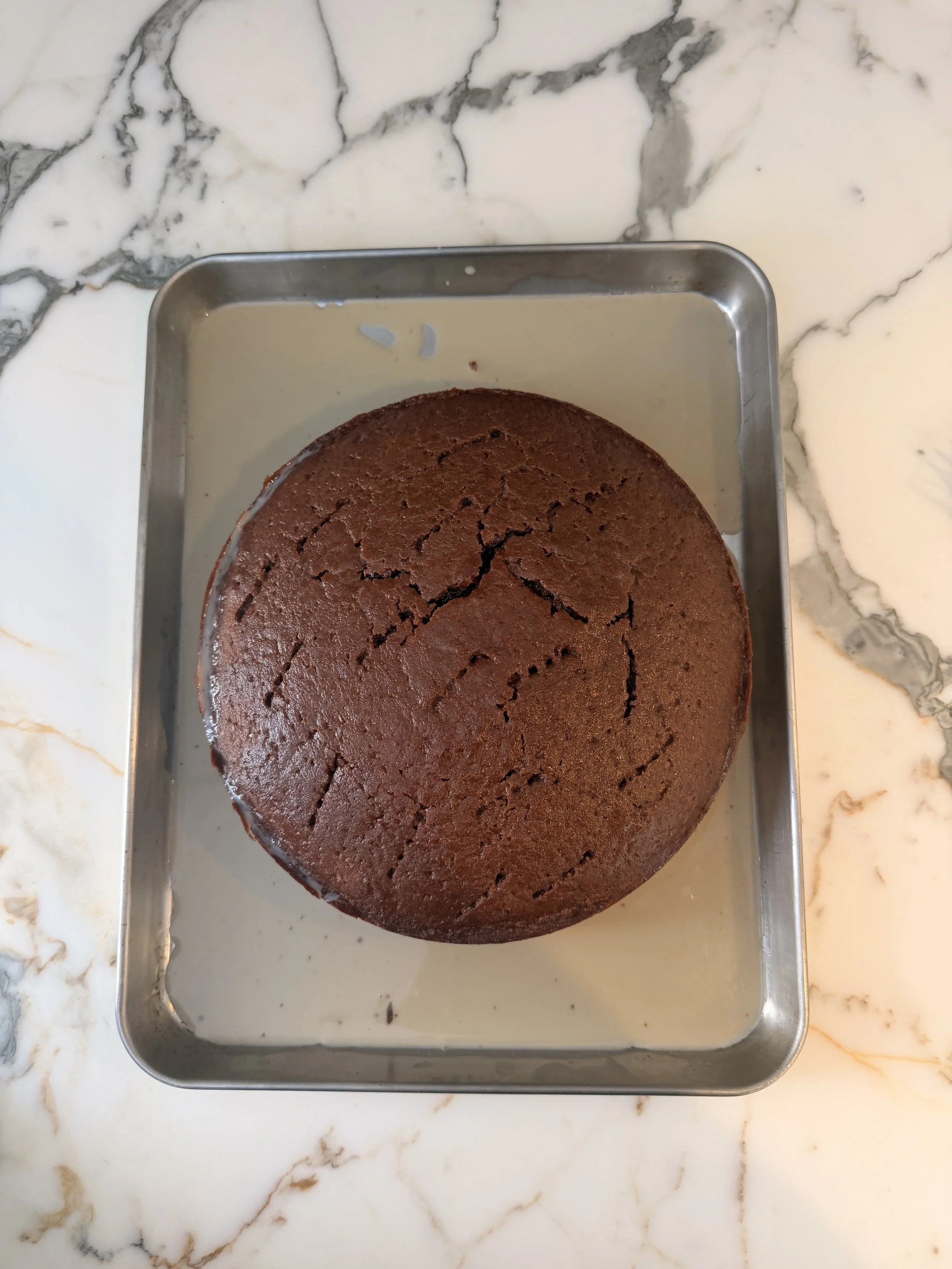
Remove the cake from the oven and allow it to cool in the pan for 1 hour. Carefully remove the cake from the pan and place it on a sheet tray. Set aside.
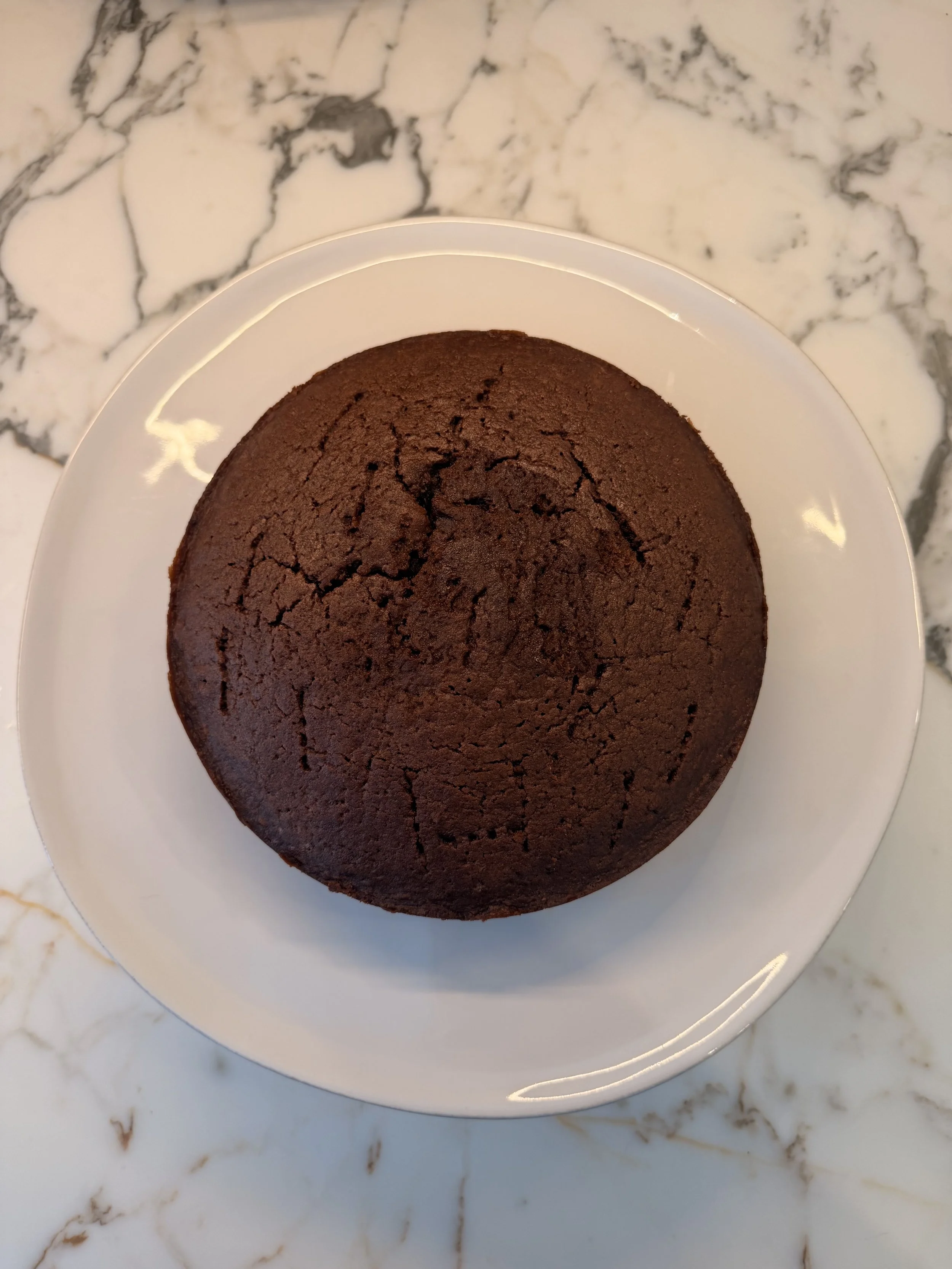
Once both the cake and the milk soak are completely cool, use a skewer or fork to poke holes all the way through the cake. Slowly pour half of the milk soak evenly over the cake and let it absorb for 10 minutes. Then pour the remaining soak over the cake. Refrigerate for at least 1 hour to allow the cake to fully absorb the liquid.
For the meringue, place the egg whites and sugar in the very clean bowl of a stand mixer. (Any grease or residue will prevent the whites from whipping properly.)
Fill a small saucepan halfway with water and bring it to a simmer over medium heat. Reduce the heat to low and place the bowl with the egg whites over the pot, making sure the bottom of the bowl does not touch the water. Gently heat the mixture with the steam, stirring constantly, until the sugar has completely dissolved, about 3 minutes. Tilt the bowl as needed to help dissolve sugar along the sides. To test, rub a small amount between your fingers; it should feel completely smooth, with no sugar crystals. Once dissolved, remove the bowl from the heat and let it cool for about 5 minutes.
Place the bowl back on the stand mixer fitted with the whisk attachment. Beat on low speed until the mixture becomes foamy, then increase to high speed—whip for about 10–15 minutes, or until stiff, glossy peaks form.
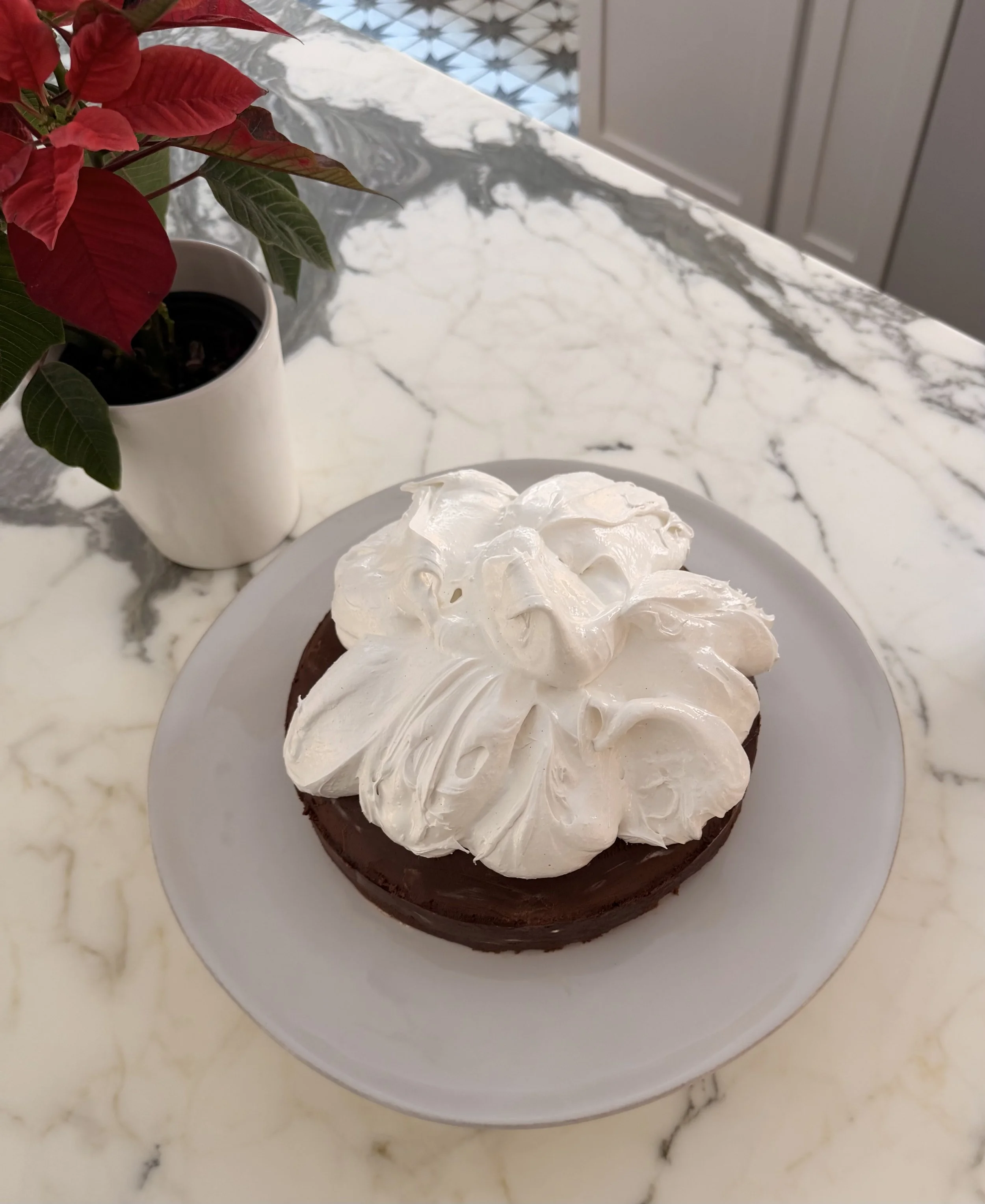
Once stiff peaks have formed, add in the vanilla and beat just until combined. Remove the cake from the refrigerator. Dollop or pipe the meringue over the top. This is your chance to be creative. Set aside until ready to serve.
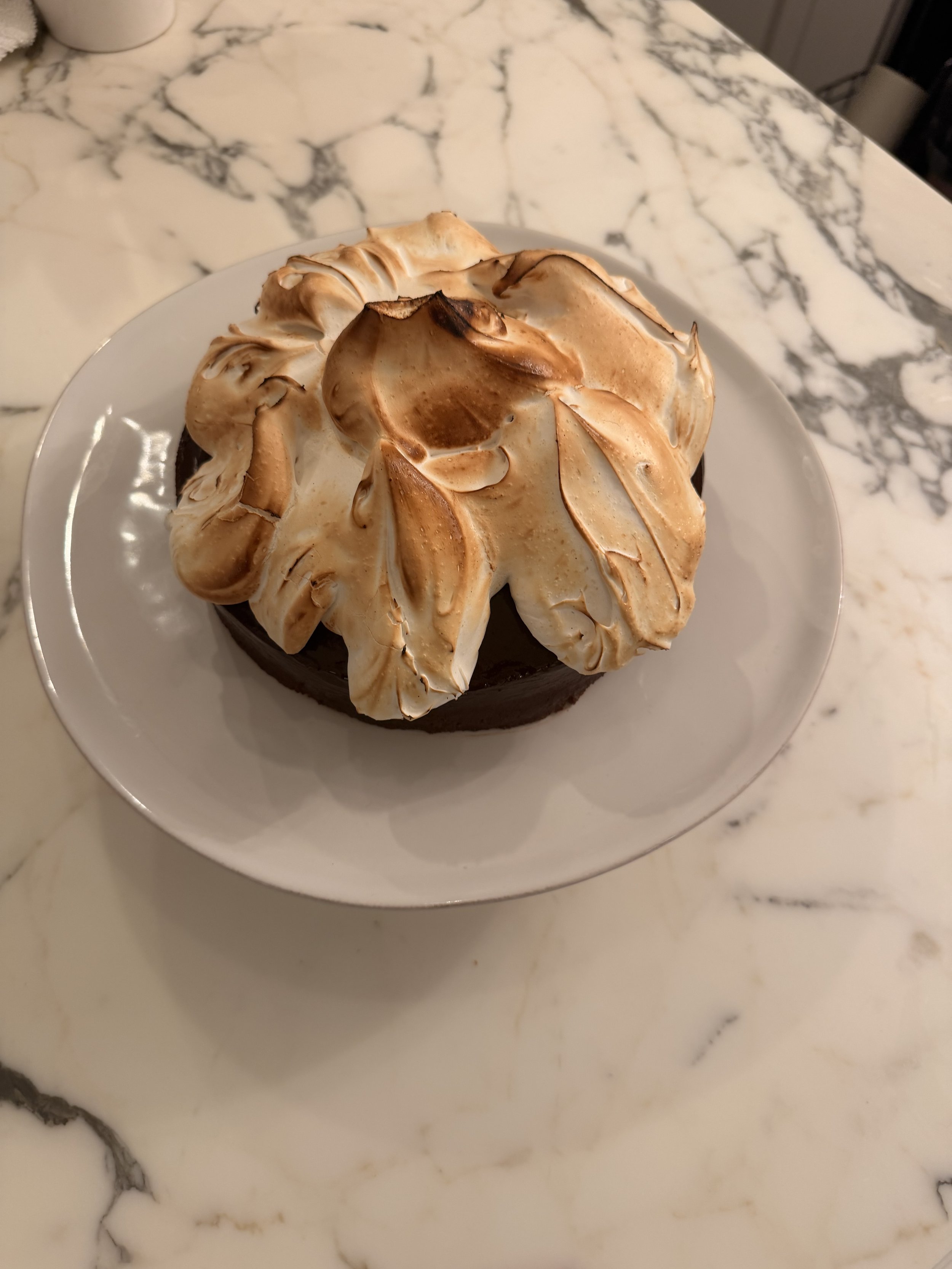
Just before serving, torch the meringue until golden brown.
Serve and enjoy!
NotesCookware
Use an 8-inch cake pan for the cake layer. I highly recommend using a stand mixer, especially for the meringue, but a handheld electric mixer will work just as well. It will simply take a bit longer to reach stiff peaks.
Room Temperature Eggs
This might not seem like a big deal and may feel like an annoyance to remember, but the difference it makes in the batter is noticeable. Cold eggs are harder to incorporate into dough. Eggs that are at room temperature blend much more easily with the other ingredients, which ultimately leads to a fluffier, lighter end result. If you forget to take the eggs out ahead of time, simply fill a glass jar or large vessel with hot water and allow the eggs to sit in the warmth for at least 5 minutes before using. The eggs will crack more easily, and when added to properly creamed butter, the mixture should not break. Everything should stay smooth and well emulsified.
