White Miso & Black Sesame Cookies
Ingredients
2 sticks unsalted butter
3 tbsp white sweet miso paste
1 1/2 cup fine cane sugar
2 eggs, room temperature
1 tbsp vanilla bean paste
3 cups unbleached all-purpose flour
2 tsp baking powder
4 tbsp black sesame paste, see note
Method
In the bowl of a stand mixer fitted with the paddle attachment, add the softened butter and miso paste. Cream on high speed until pale and fluffy (2–3 minutes). Add the sugar and vanilla bean paste and mix until smooth and combined (about 1 minute).
Add the eggs one at a time, mixing well after each addition until the mixture is smooth and creamy (30–45 seconds per egg). Sift in the flour and baking powder and mix just until combined (10–15 seconds).
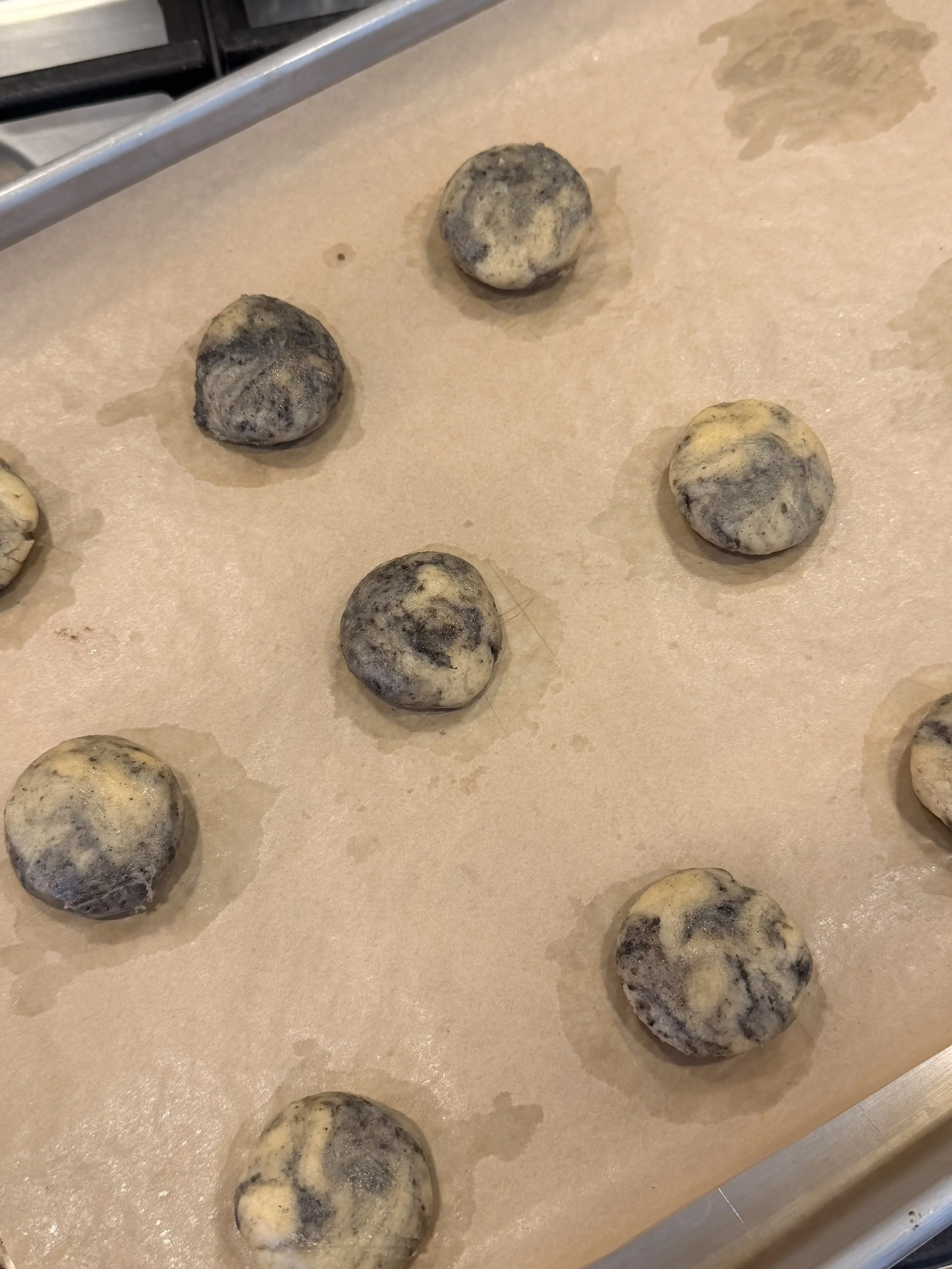
Once the main dough is mixed, add the black sesame paste in increments, mixing gently so the sesame remains swirled, not fully incorporated.
Turn the dough out onto a smooth surface and press into a uniform rectangle. Wrap tightly and chill for at least 2 hours, or up to 2 days. (Optional: The dough can be frozen raw. Thaw in the refrigerator for 12–24 hours, then rest at room temperature for 30 minutes before baking.)
Preheat the oven to 350°F (175°C). Line two sheet pans with parchment paper.
Let the dough sit at room temperature for about 30 minutes. Using a scale, portion into 20 g balls and arrange on the prepared pans, leaving space between each cookie.
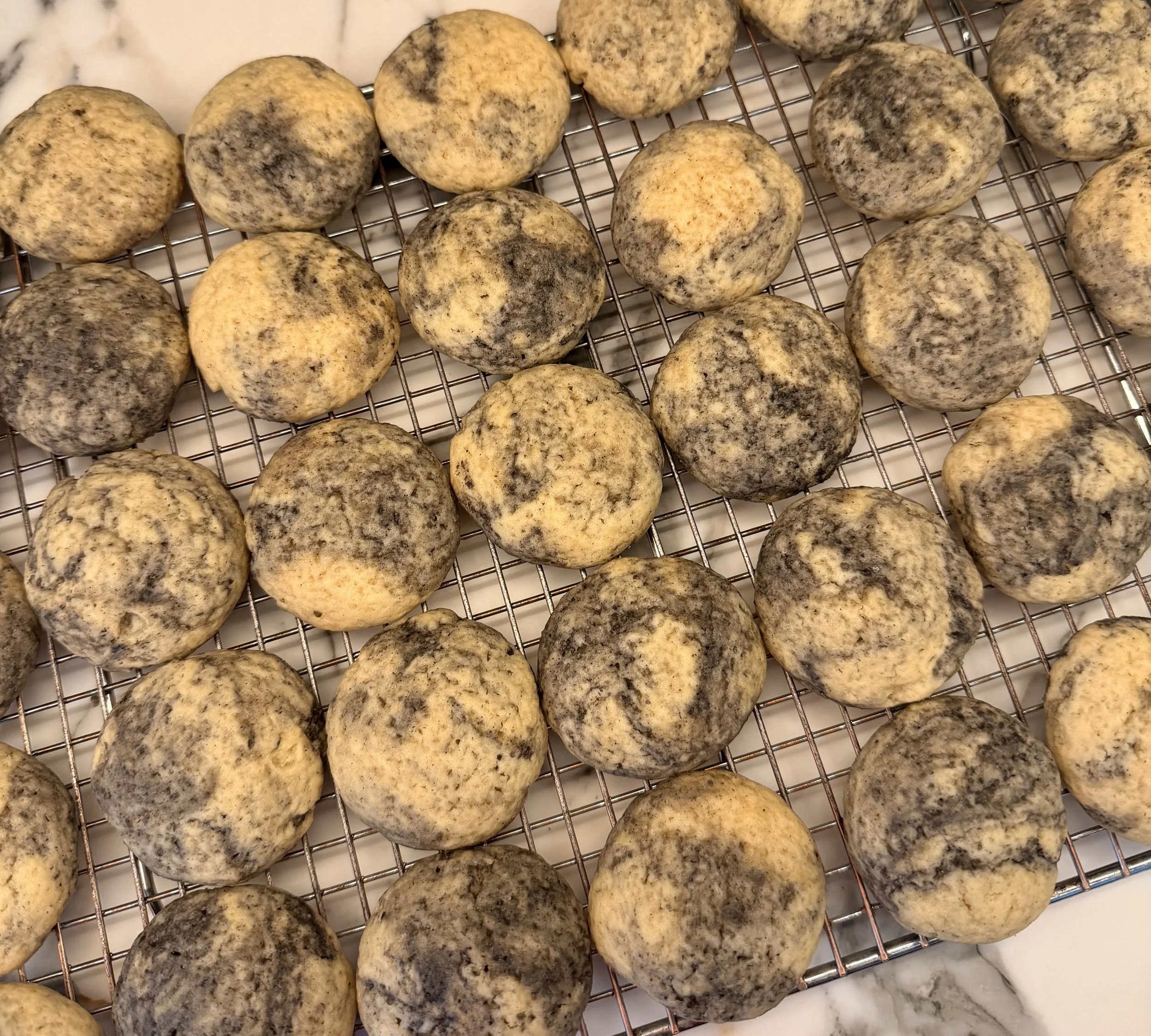
Bake for about 11 minutes, until the bottoms are just beginning to turn golden and the tops remain pale. Remove from the pans immediately and cool completely on a wire rack (20–30 minutes).
Once cooled, enjoy. Store in an airtight container at room temperature for up to 4 days for best flavor. The baked cookies can also be frozen.
NotesBlack Sesame Paste (Black Tahini)
You can absolutely buy black tahini, but if you’re in a pinch and can’t get your hands on it, you can always make your own. Simply blend black sesame seeds with a small amount of water until you achieve a smooth paste. I made my own for this recipe and added a touch of maple syrup to the paste for extra depth and subtle sweetness.
Dough Freezing (Extended Storage)
For freezing periods longer than several days, tightly double-wrap the dough in plastic wrap, then place it in a resealable freezer bag. Vacuum sealing is recommended when available. Properly wrapped dough may be stored frozen for up to 2 months. Thaw overnight under refrigeration before portioning and baking.Freezing Baked Cookies (Alternative Method)
Baked cookies can also be frozen after they have cooled completely. Arrange the cookies in a single layer inside a resealable freezer bag. Seal the bag almost entirely, insert a straw into the remaining opening, and remove excess air by suction before sealing it completely. This method mimics vacuum sealing while minimizing pressure that could damage the cookies.Room Temperature Eggs
This might not seem like a big deal and may feel like an annoyance to remember, but the difference it makes in the dough is noticeable. Cold eggs are harder to incorporate into dough. Eggs that are at room temperature blend much more easily with the other ingredients, which ultimately leads to a fluffier, lighter result. If you forget to take the eggs out ahead of time, simply fill a glass jar or large vessel with hot water and allow the eggs to sit in the warmth for at least 5 minutes before using. The eggs will crack more easily, and when added to properly creamed butter, the mixture should not break. Everything should stay smooth and well emulsified.
